Here, There, Once and for All
09 May – 14 Aug. 2026

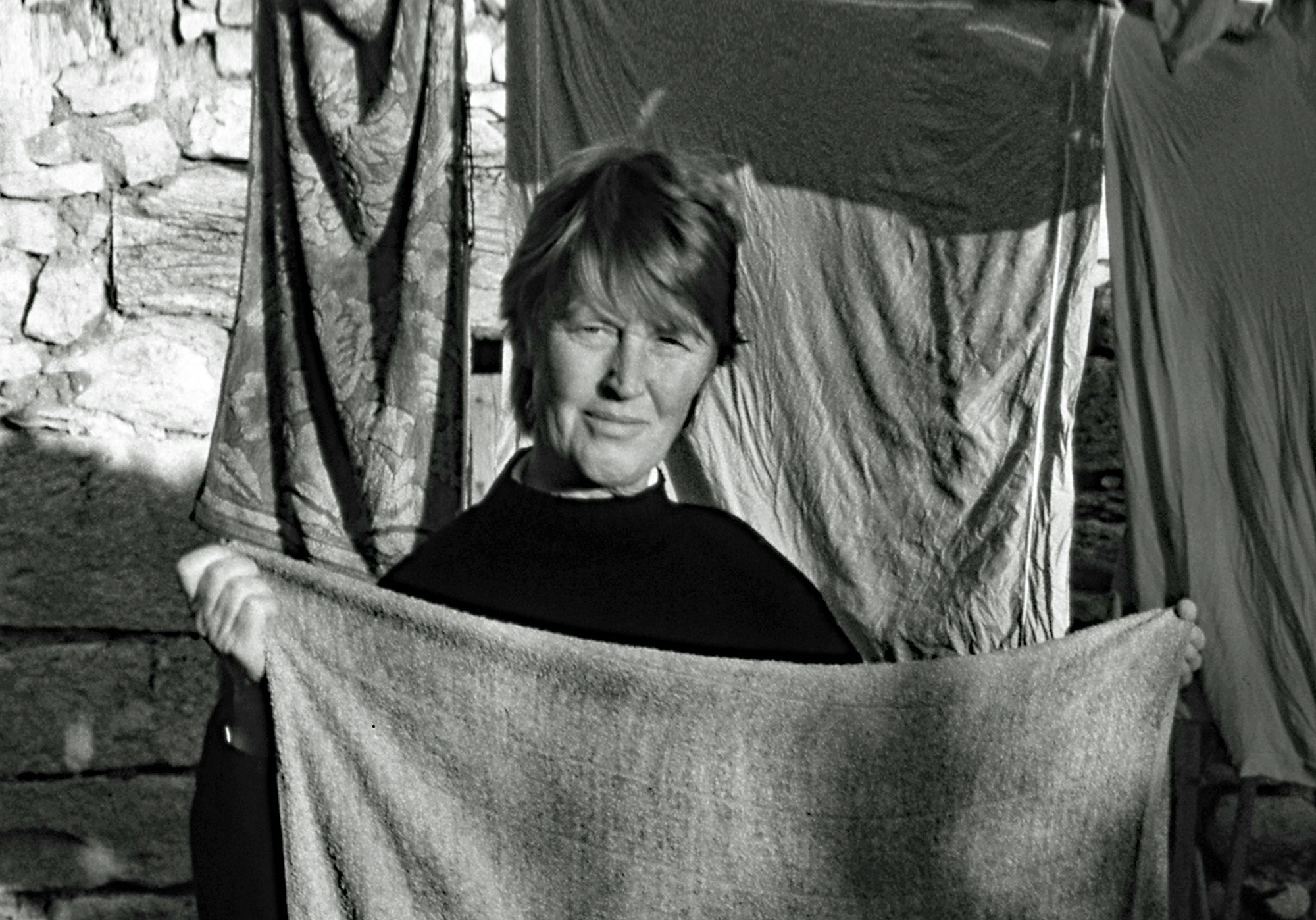
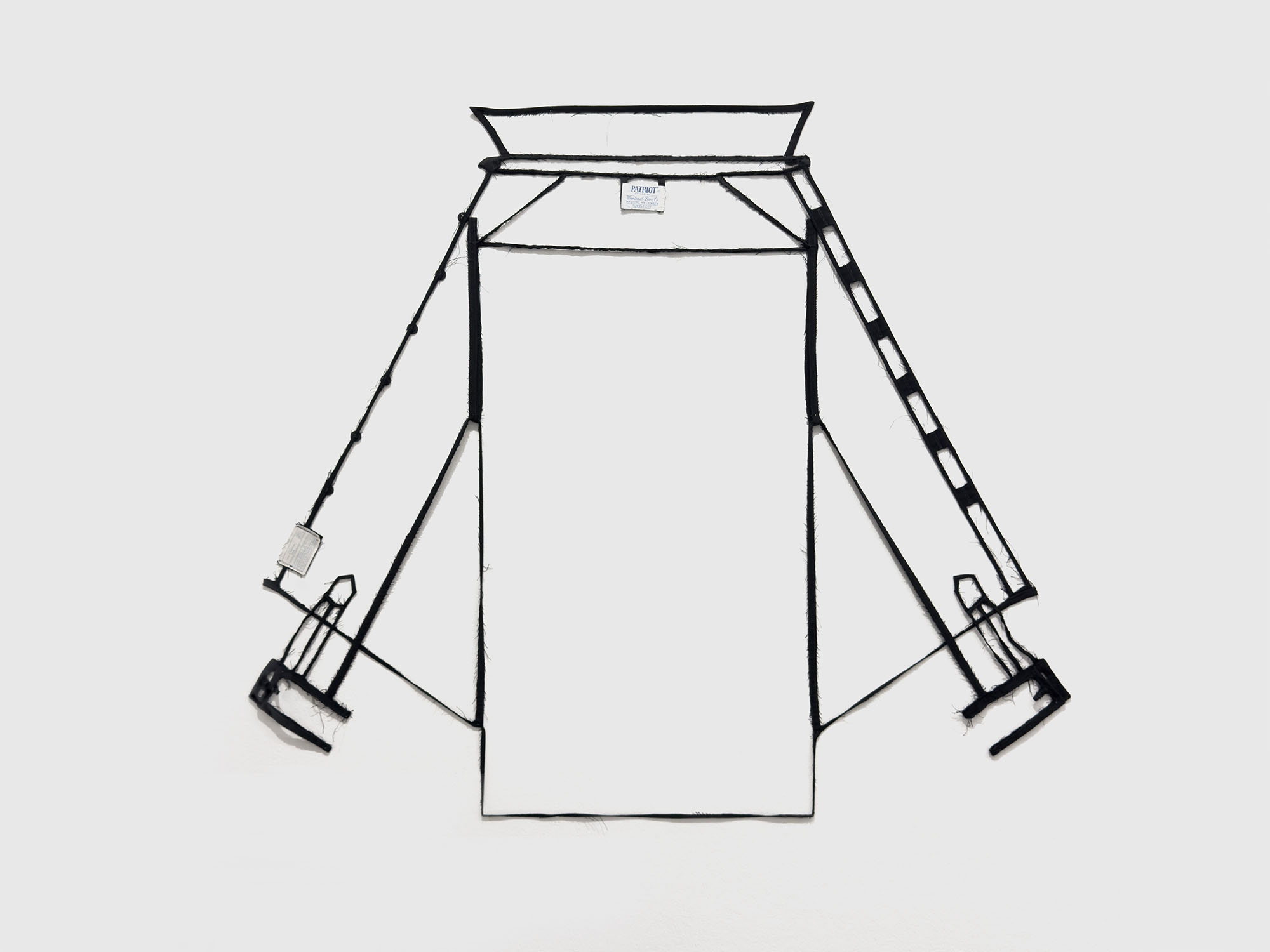
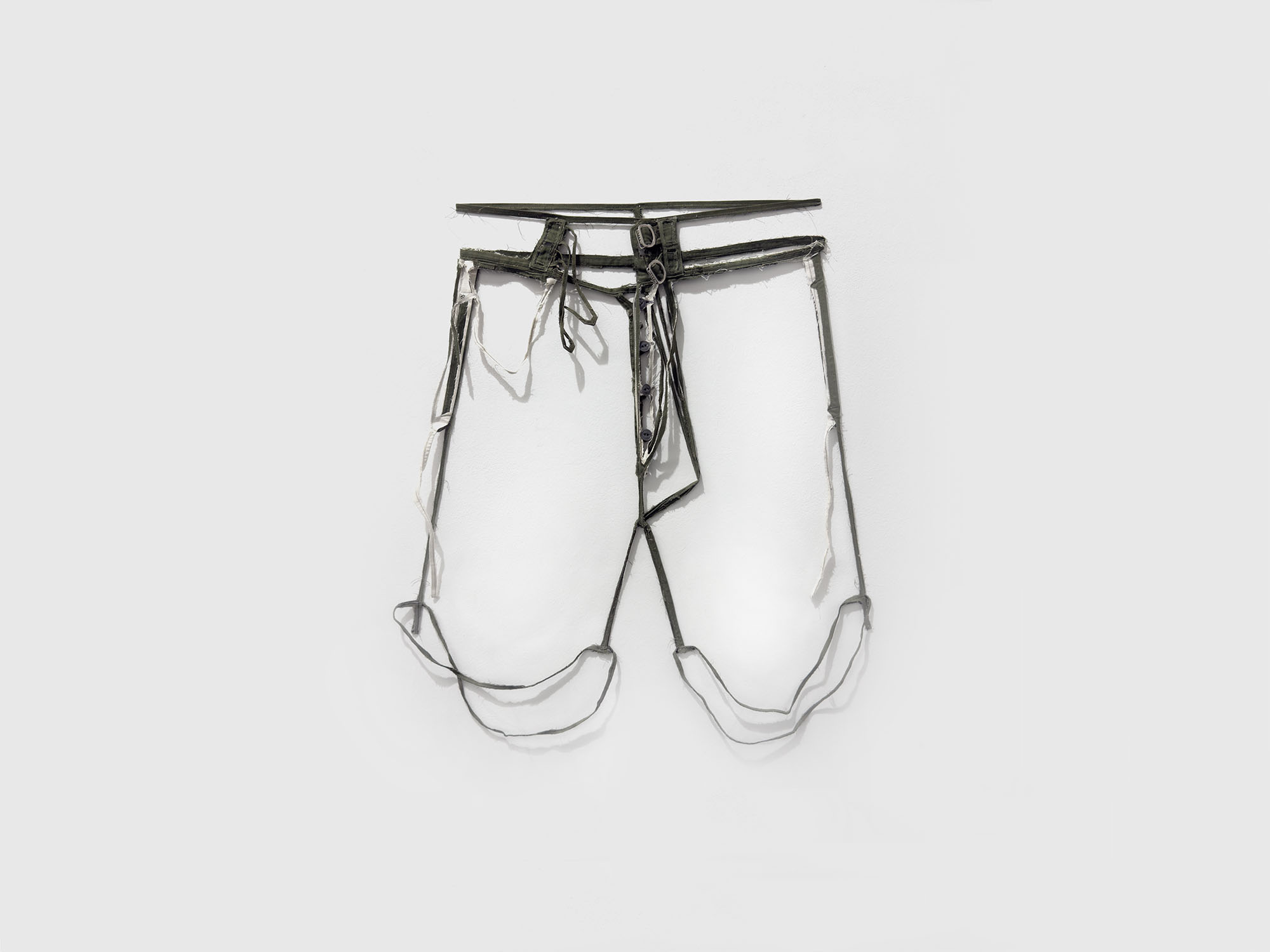
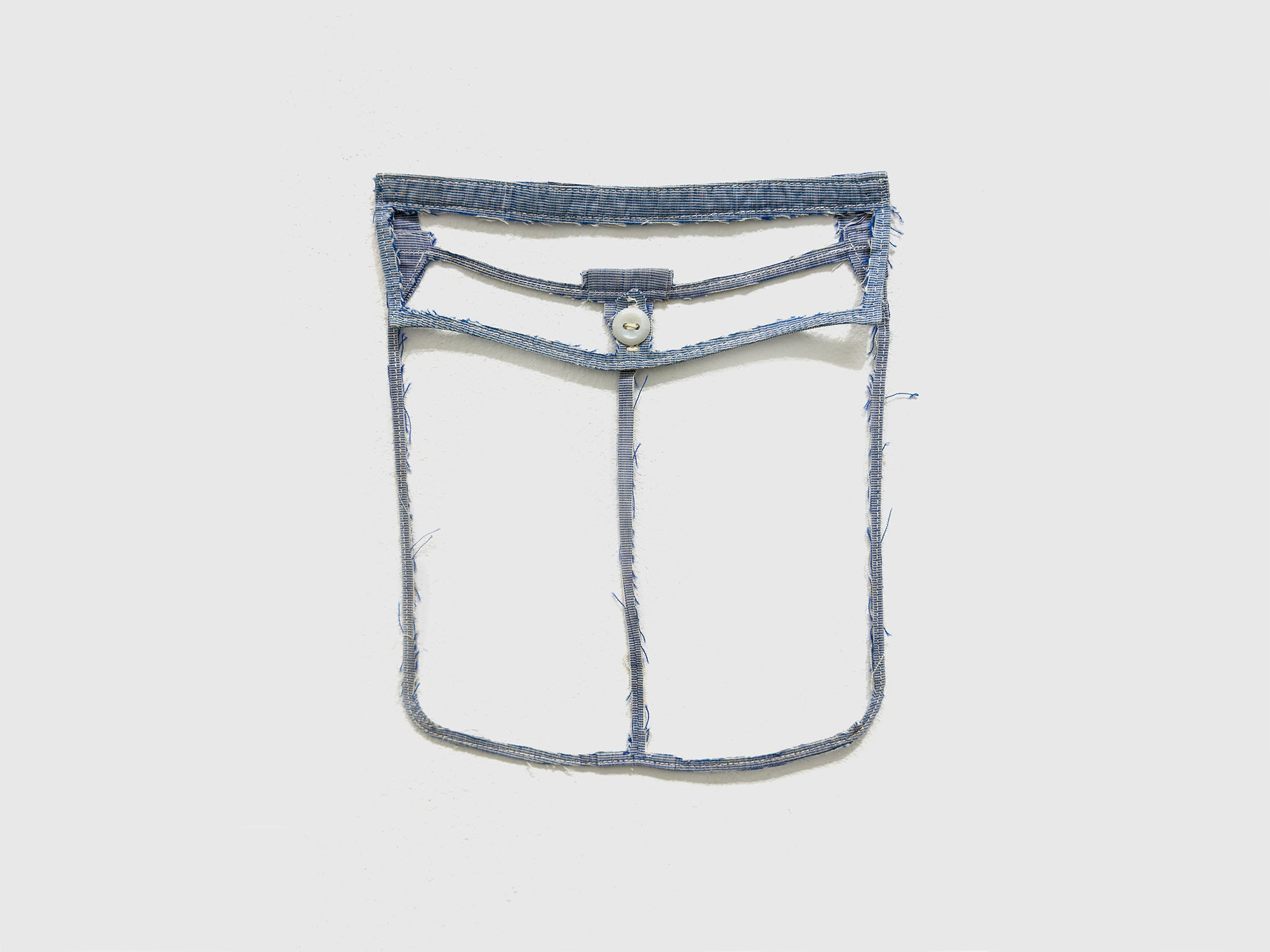
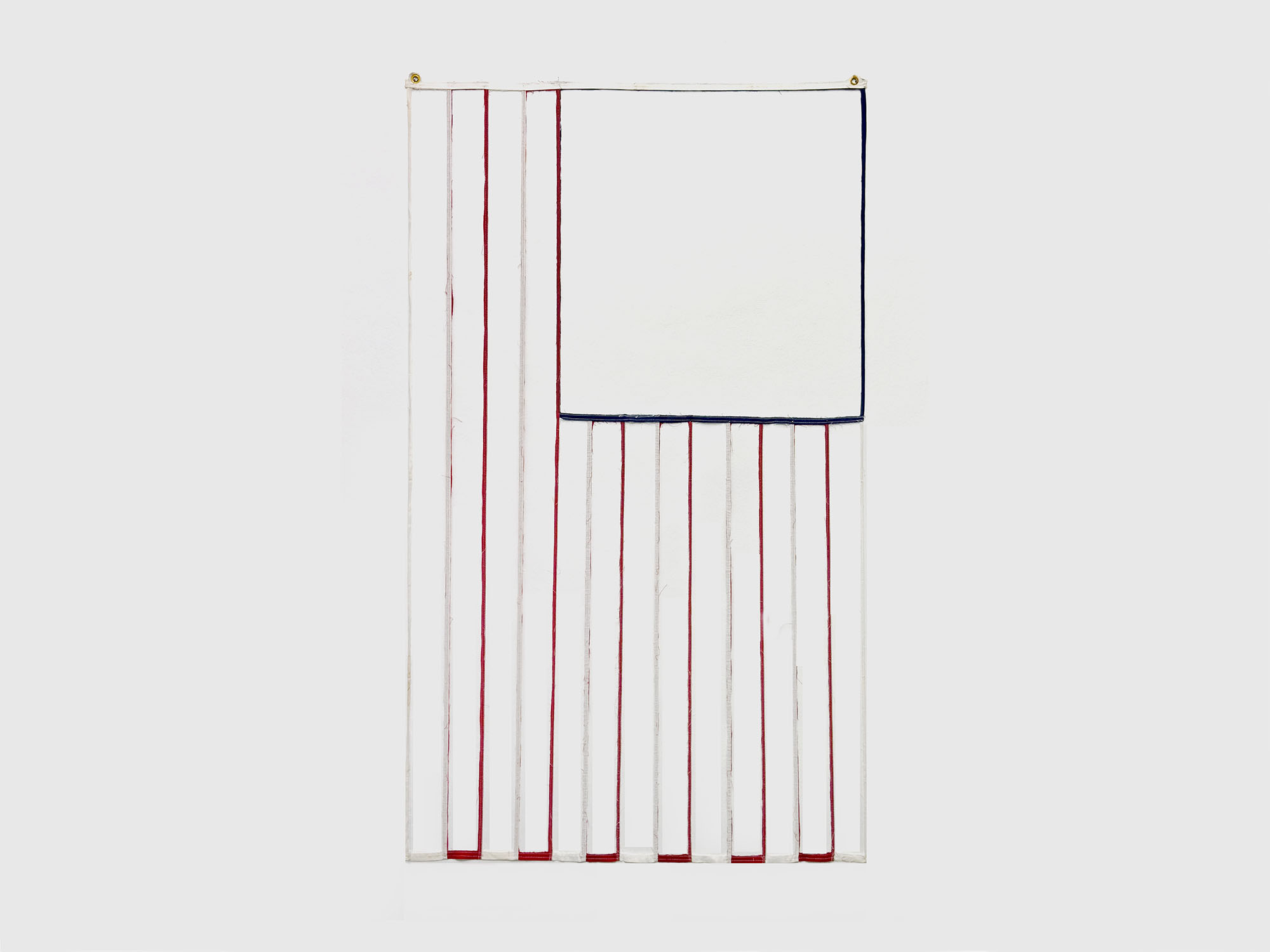
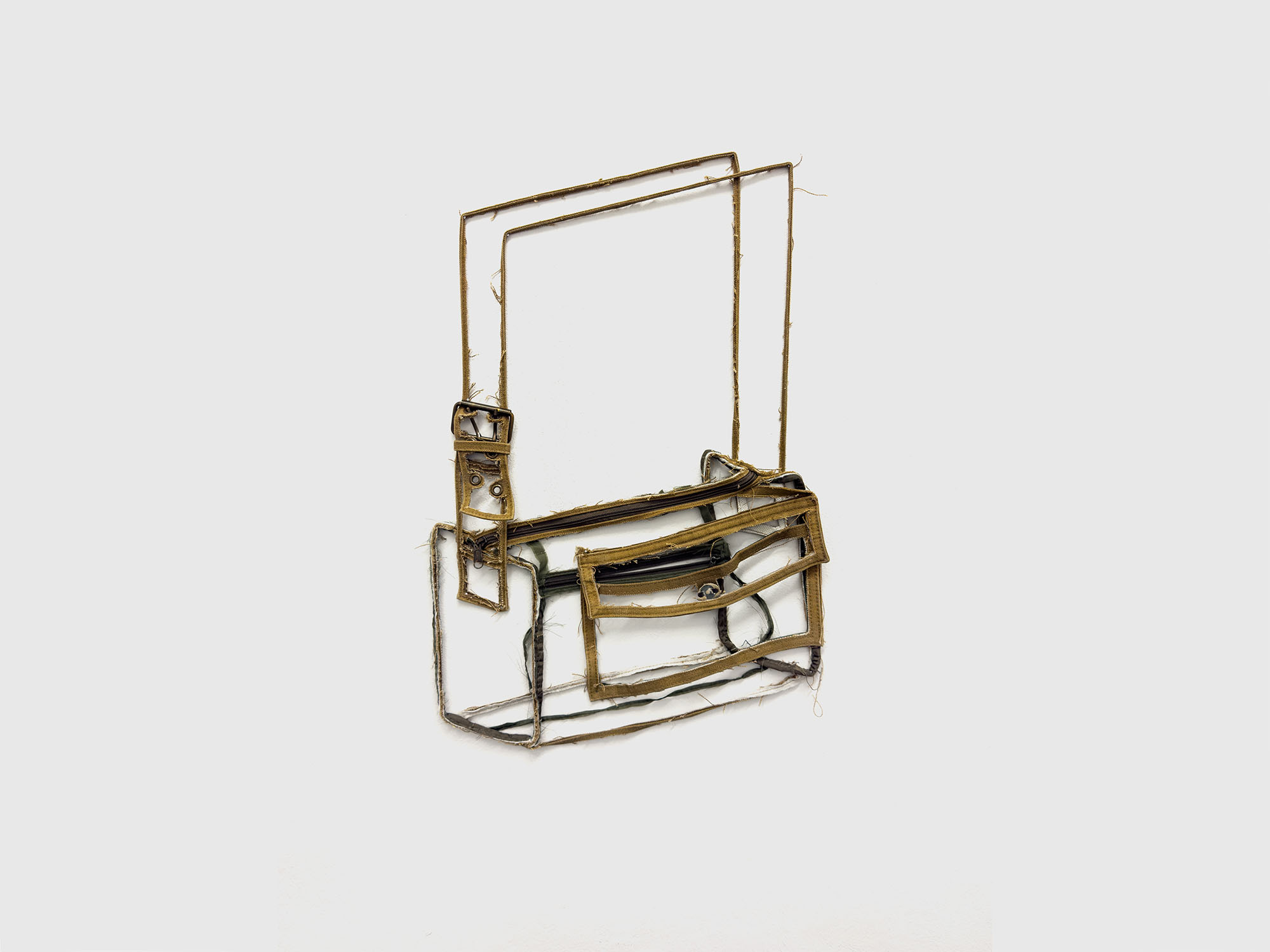
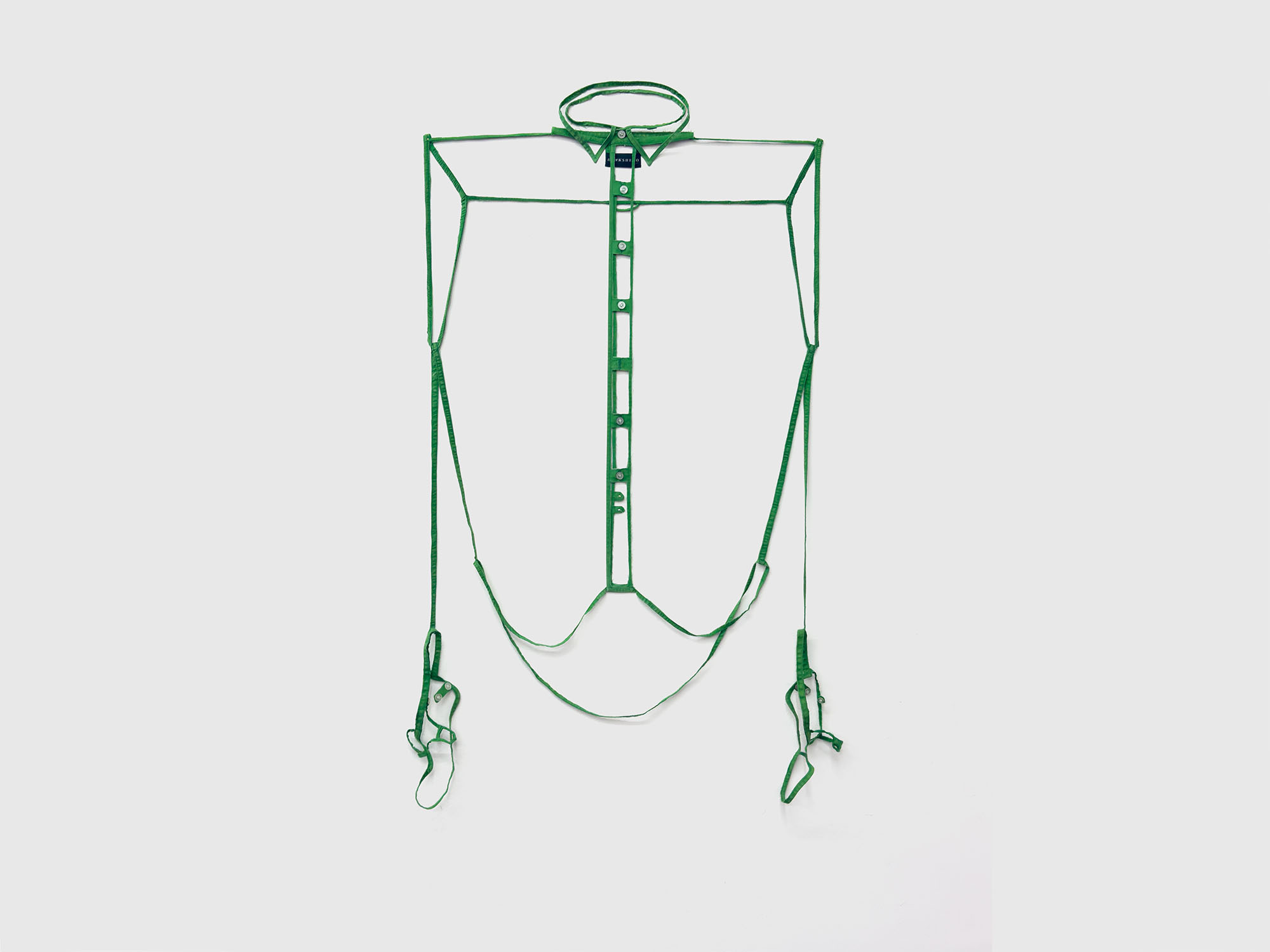
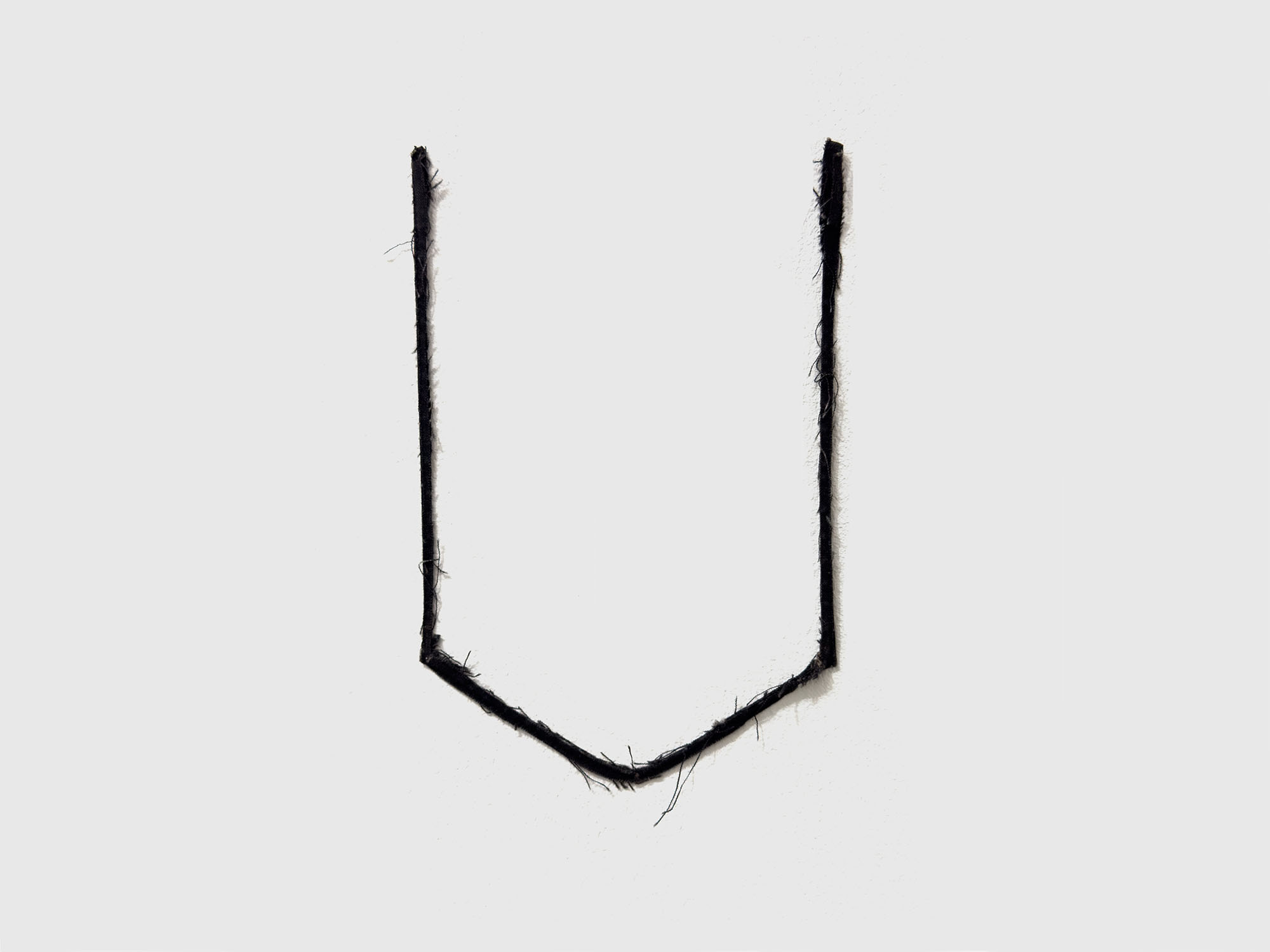
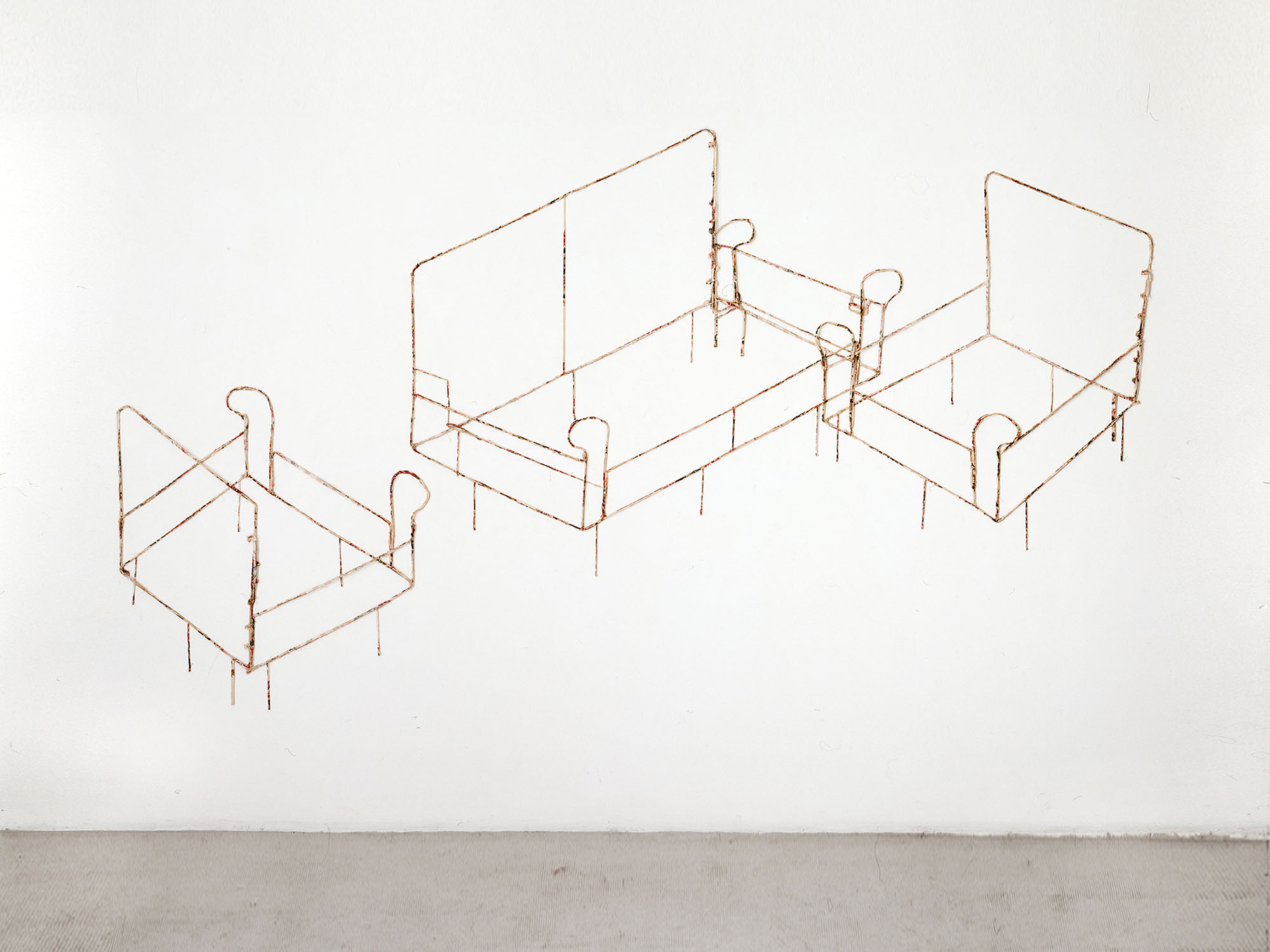
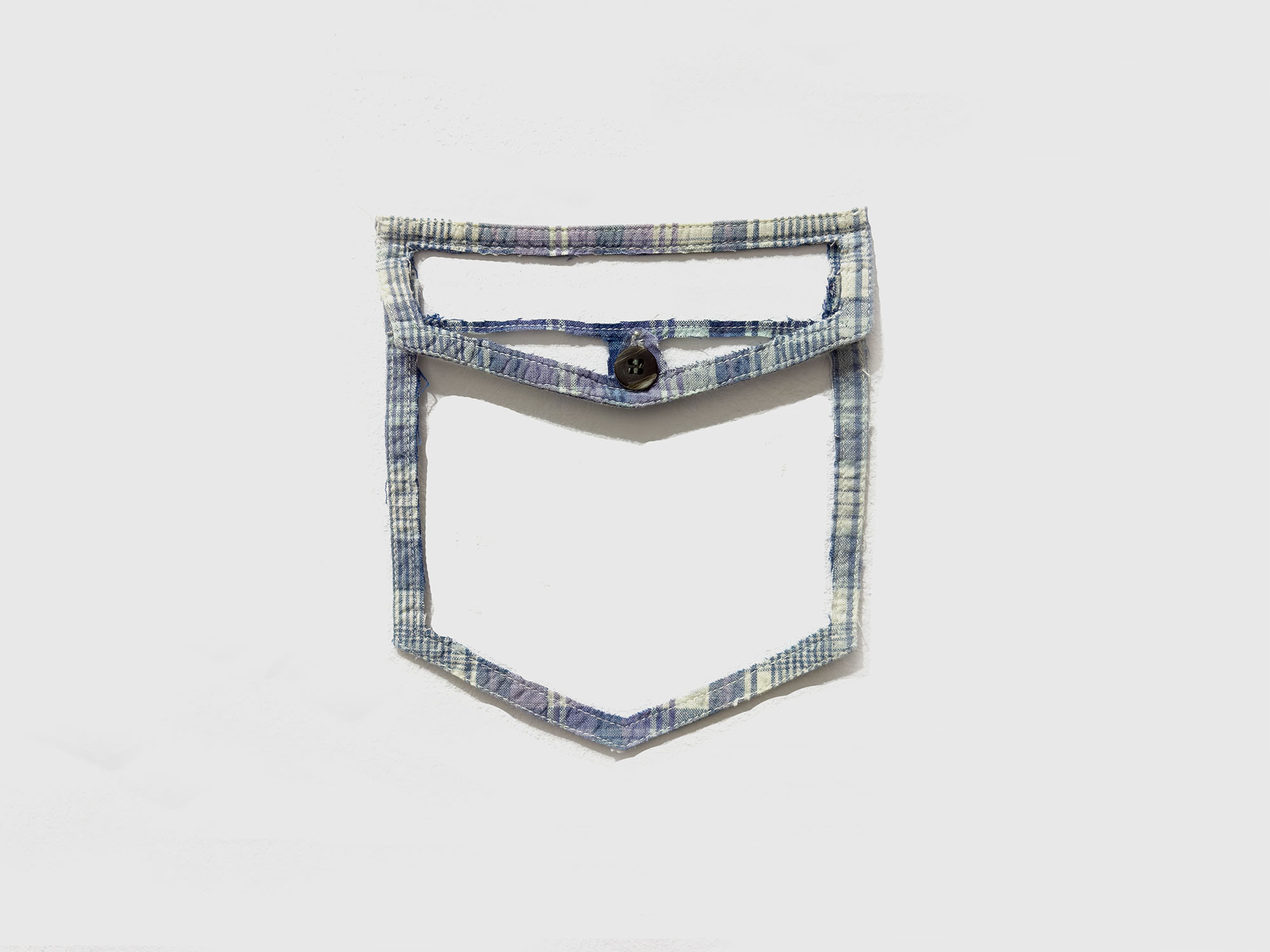
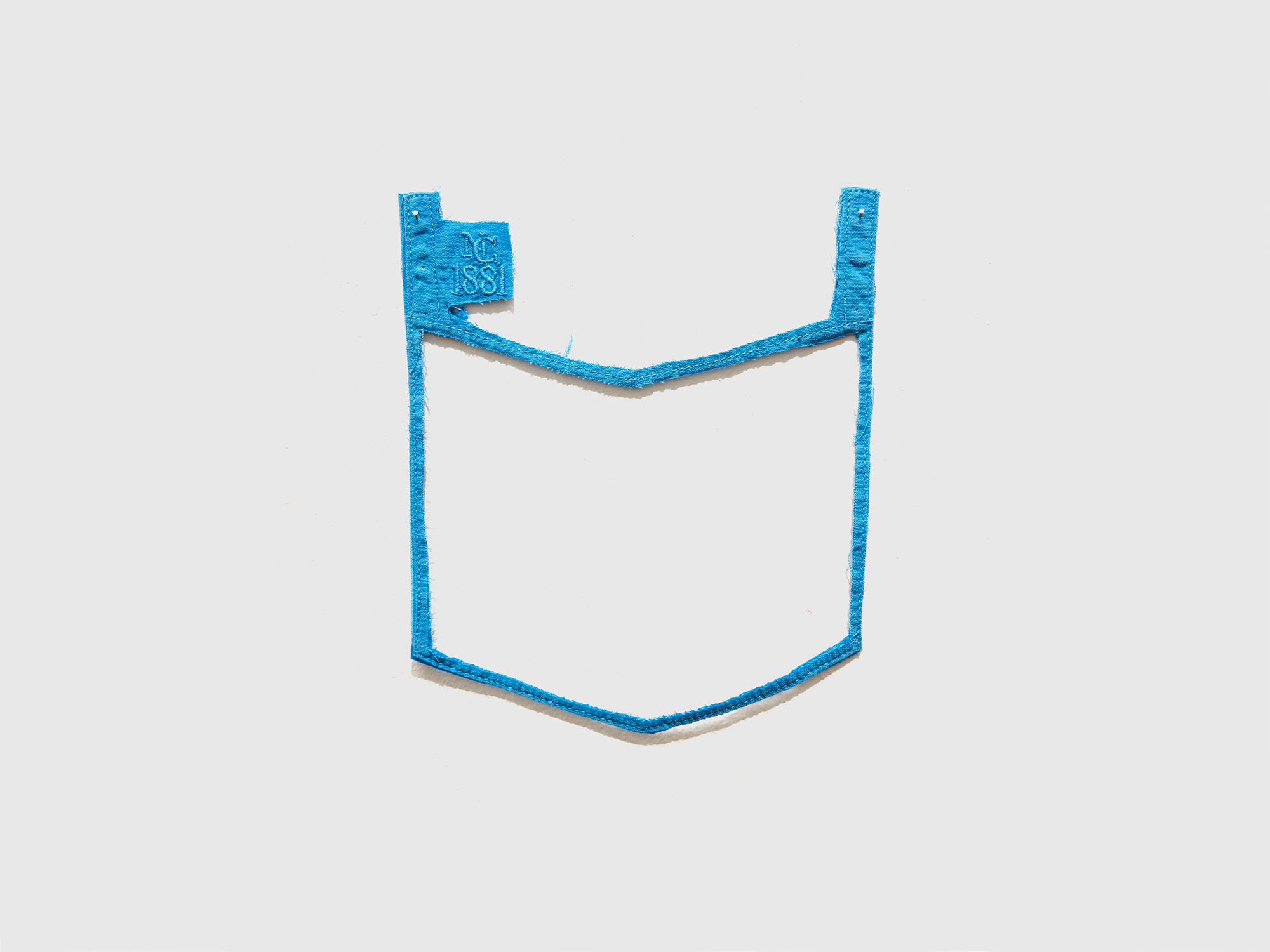
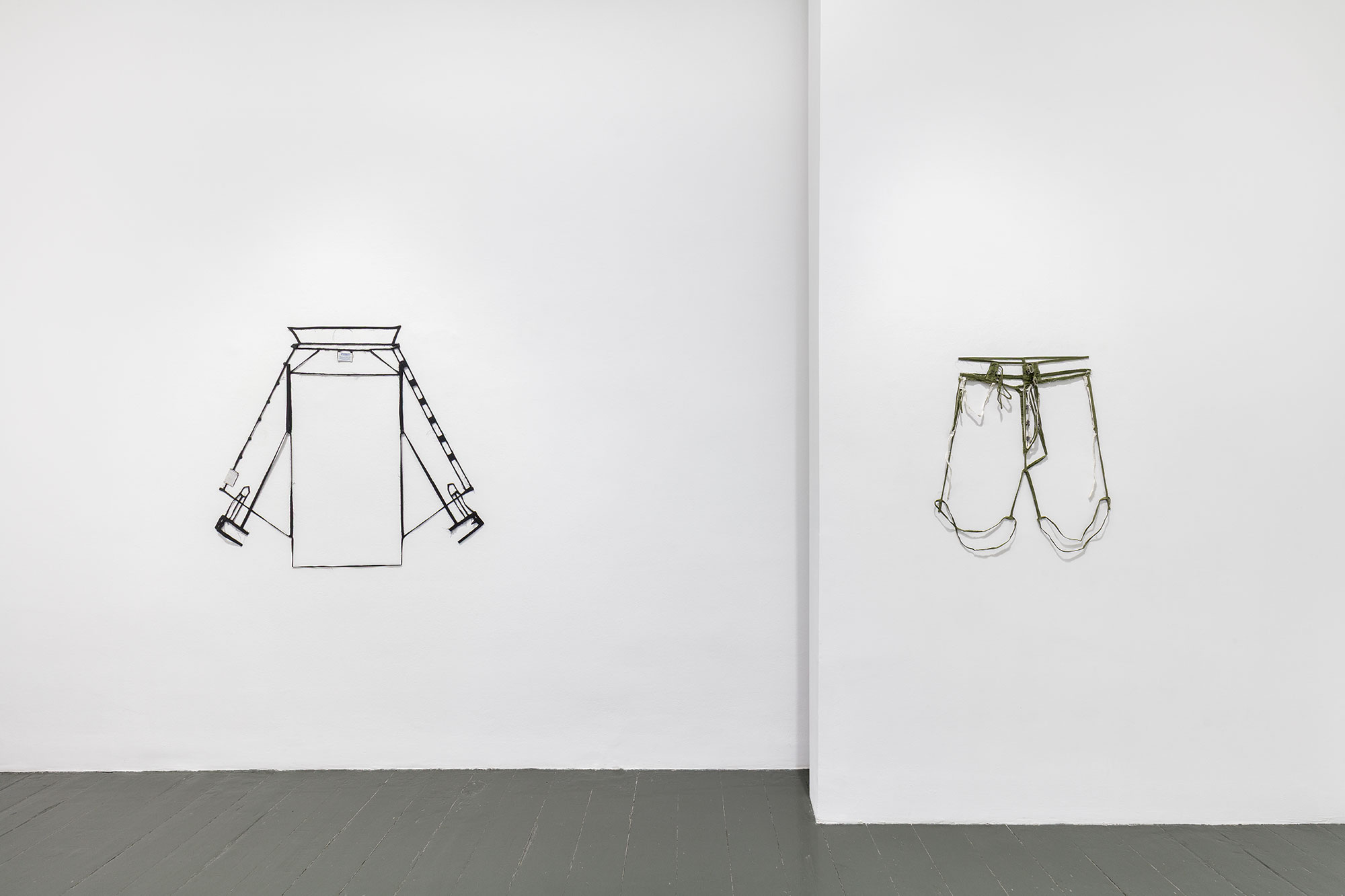
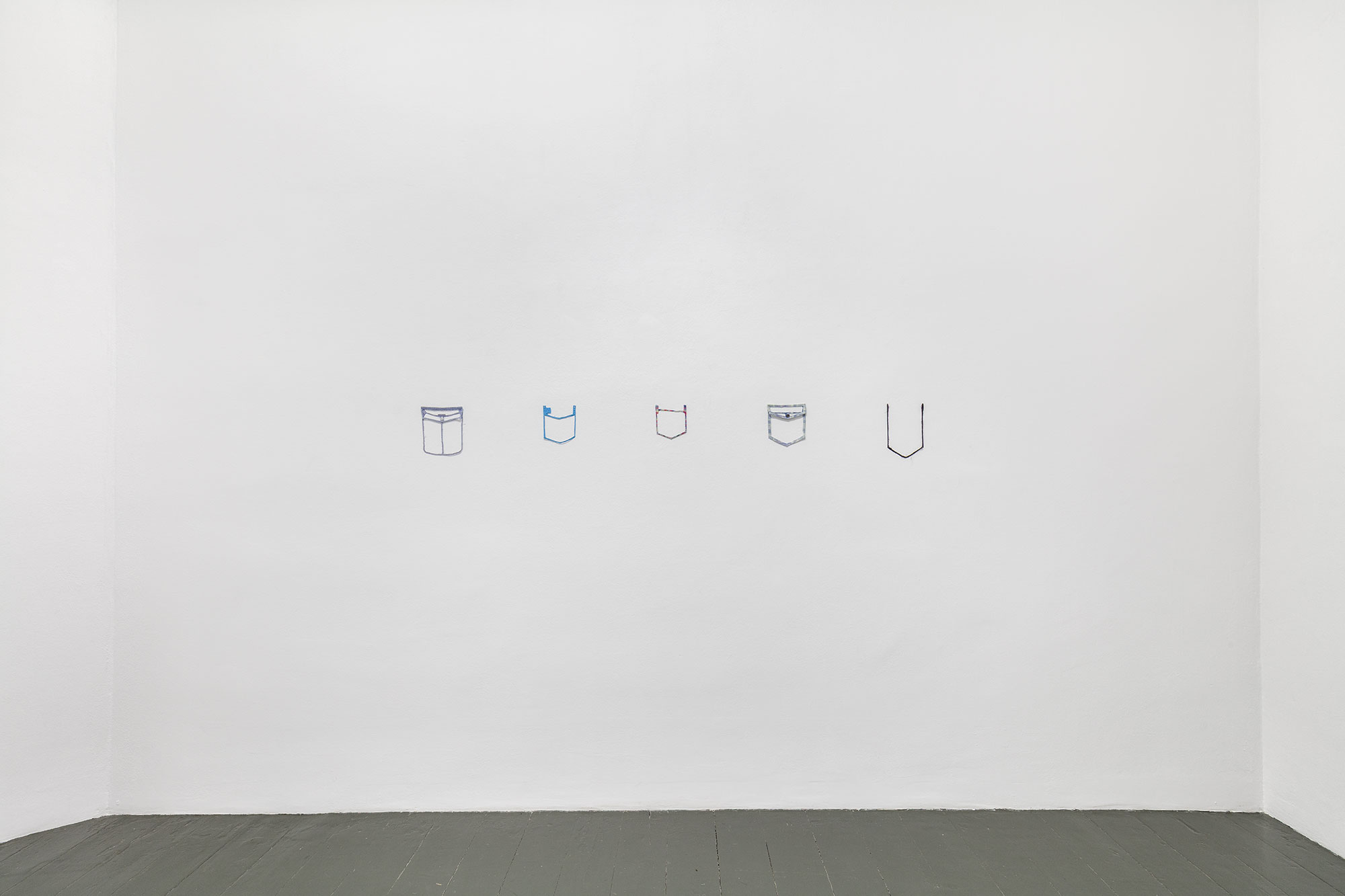
“I began cutting away the cloth of found garments, tarpaulins etc. to leave the seams. The structure is rediscovered when the seams are pinned to the wall, when I find them, they have lost their form, there is deconstruction + reconstruction and something altogether different. There has been a choice of angle and space. Is it the original or something else? From the destruction of the fabric object a system is necessary, though the chaos in itself tends towards the structure. When I look for material, there is a great element of chance in what I find. I find loose structures which have already lost their form and by removing the excess (sculpting) I am left with the structure, with perspectives, with fractal dimensions.“
Pip Culbert
Culbert’s deconstructed fabric objects have been stripped down to their essential seams. In this exercise of recontextualising the everyday, items are reduced to their bare bones through a process of subtractive drawing that renders three-dimensional objects twodimensional.
Seams are the central motif in Pip Culbert’s artistic practice. Deconstructing clothes, bags, tents, and other textile based objects, gleaned by the artist over time, main structural lines of these forms remain. Objects are transformed into conceptual ‘ghosts’, the forms are reduced to archetypes. Just as a chair is not merely a chair for Joseph Kosuth, and a pipe is not just a pipe for René Magritte; these are not only skirts, pockets, bags, they are much more.
Like bold shadows or distinctive silhouettes, Culbert’s works appear as both painterly and sculptural forms. Seams hold different layers of fabric together with stitches, and Culbert follows their traces to create her “soft” sculptures. Culbert reverses the process of any tailor or machine; there is a modesty and economy of form—it is a process of relief. However, the subtle nuances of Culbert’s work extend much further. One can detect within these works the current political demands our world is facing; from war, political conflict, poverty and austerity; all of which will shape our future.
Pip Culbert studied Industrial Design and Engineering at the Royal College of Art London, ,she graduated in 1961
Exhibitions and exhibition participations include
Museum of New Zealand, Te Papa; Frith Street Gallery, London; UK; Centre for the Study of Sculpture, Henry Moore Institute Leeds, UK; Christchurch Art Gallery, NZ; Dunedin Public Art Gallery, NZ; Waitakere Centre for Arts, Titirangi, Auckland, NZ; Centre for Contemporary Art, Hamilton, NZ;Wellington City Gallery, Wellington, NZ; Centre d’Arts Plastiques, Saint-Fonts, FR;Musée Greuze (Art Contemporain), Tournus, FR; Visual Arts Center of New Jersey Summit, NJ, US; Fox Jensen McCrory, Auckland, NZ; Overbeck-Gesellschaft, Lübeck, DE;Kunsthalle Fridericianum, Kassel, DE;Kunstmuseum Ahlen, DE; Museum Pfalzgalerie Kaiserslautern, DE;Kunstmuseum Heidenheim, Heidenheim, DE; Museum im Kulturspeicher Würzburg, DE; FoxJensenMcCrory, Auckland, NZ; VAN HORN, Düsseldorf, DE
Her work is held in the public collections of the Museum of New Zealand, Te Papa and Kunstpalast, Düsseldorf
PIP CULBERT | GALLERY EXHIBITIONS
09 May – 14 Aug. 2026

20 Mar. – 02 May 2026

23 Jan. – 07 Mar. 2026

14 Nov. 2025 – 10 Jan. 2026

5 Sep. – 25 Oct. 2025

25 May – 19 Jul. 2025